
Therapy for Parents of Anxious Kids & Teens in Tampa, FL
In person in Tampa · Virtual throughout Florida and vermont

The reassurance isn't helping. The avoidance is getting worse. There's another way.
I’m guessing you’re exhausted.
You’ve been managing your child’s anxiety for a while now. Maybe years. You’ve read the articles. Tried the strategies. Stayed up way too late Googling “what to do when your kid refuses to go to school” or “how to stop your child from having a meltdown every single morning.”
You’ve probably tried being patient. Tried being firm. Tried bribery. Tried just… going along with it because the alternative was worse.
And still - nothing is really working. Or maybe it works for a minute and then it doesn’t. And meanwhile, the anxiety seems to be spreading - to siblings, to your relationship, to you.

If this is your life right now
Here’s what parents tell me when they finally reach out:
“I don’t know what to do anymore. Nothing is working.”
“My kid won’t go to a therapist. I’m out of options.”
“I feel like I’m walking on eggshells in my own house.”
“I’m so tired of this I can’t even think straight.”
“I just want to help my kid navigate this better and am at a loss.”

If any of that sounds familiar, you’re in the right place. And here’s the thing nobody tells you until they do:
Your child doesn’t have to come to therapy for things to change.

Let’s get this out of the way first: you are not the reason your child has anxiety (or OCD or any other diagnosis). Anxiety is complicated - biology, temperament, nervous system wiring, the unpredictability of the world. It is not because you loved them too much or responded too quickly or weren’t consistent enough.
That said.
There’s a really natural thing that happens when you love an anxious kid. You try to protect them. You give a little extra reassurance. You adjust the routine slightly so today goes more smoothly. You pick your battles because honestly, you’re running on empty and a meltdown in the school parking lot is not what any of us need right now.
All of that makes total sense. And when it becomes a pattern it can accidentally keep the anxiety loop going. Not because you’re doing it wrong. Because anxiety is sneaky and these responses feel like help in the moment.
You Didn’t Cause This. And Also - Here’s What We Can Actually Do About It.
This is actually great news. Because it means there is something concrete you can do. The patterns that have developed between you and your child (the reassurance, the avoidance, the negotiating) can be shifted. And when they shift, kids feel safer. More capable. More able to face the things that have been feeling impossible.
You just need to know how to do it. And I can help with that.

what we actually do in sessions
What Therapy for Parents of Anxious Kids & Teens in Tampa, FL Looks Like
This is the part that surprises most parents.
You come to sessions. Not your child. We work together on understanding what’s driving the anxiety, on how you’ve been responding to it (with so much love, I know), and on building a new approach that actually helps your kid move through the hard stuff instead of around it.
Research shows that when parents change how they respond to their child’s anxiety, kids’ anxiety levels drop significantly - even when the child isn’t directly in treatment. This isn’t a workaround. It’s an evidence-based, parent-focused approach with a lot of real data behind it.
And honestly? It’s also really good for you. Because you’ve been carrying this for a long time, and you deserve support too.
Here's what this looks like:
The Reassurance Spiral
Your kid asks if everything is going to be okay. You say yes. They ask again. You say yes again. And somehow by the end of it you’re both more anxious than when you started. We look at what’s happening in those moments and find ways to respond that are warm and supportive without accidentally feeding the loop.
School Refusal & Avoidance
Whether it’s refusing school, avoiding friends, or saying no to activities they used to love, avoidance feels like relief in the short term and makes anxiety stronger over time. We build a plan for how to support your kid in gradually facing the things that feel hard, in a way that doesn’t blow up your whole morning.
Meltdowns & Emotional Overwhelm
When your kid goes from zero to full meltdown in thirty seconds and you’re just trying to get everyone out the doorwe talk about what’s happening in your nervous system in those moments, not just theirs. Your calm is contagious. We work on building it.
Walking On Eggshells
If you’ve started adjusting your whole life around your child’s anxiety—what you say, where you go, what you plan—we look at how to start gently reclaiming some of that space without it feeling like you’re abandoning them.
Co-Parent Friction
One of you wants to push a little. One of you wants to give it more time. Both of you are right in different ways and also driving each other completely nuts. We’ll work on getting aligned—because consistency matters and you deserve to feel like a team again.
Your Own Anxiety
Anxious kids often come from anxious families—which is not a judgment, it’s biology. Sometimes the work involves looking at your own fear, your own nervous system, your own patterns. That’s not a detour. That’s often the most important part.

Did you know?
SPACE is also a treatment that works well for kids and teens with picky eating or ARFID.
The Approach: SPACE Treatment
The work I do with parents is grounded in SPACE, which stands for Supportive Parenting for Anxious Childhood Emotions. It’s a research-based, parent-focused treatment developed at Yale that specifically targets the accommodation behaviors that keep anxiety going. It’s been studied with families navigating anxiety, OCD symptoms, school refusal, selective eating, and more.
SPACE is designed to be done with parents - not children. Which means it works even when your kid is resistant to therapy, not ready for therapy, or already seeing someone else. It’s not a replacement for child therapy. It’s a proven path forward when waiting for your kid to “be ready” isn’t working.
I use it alongside everything else I bring to the room: a warm, shame-free, nervous-system-aware approach that takes your experience as a parent seriously - not just as a variable in your child’s treatment, but as someone who matters in this too.
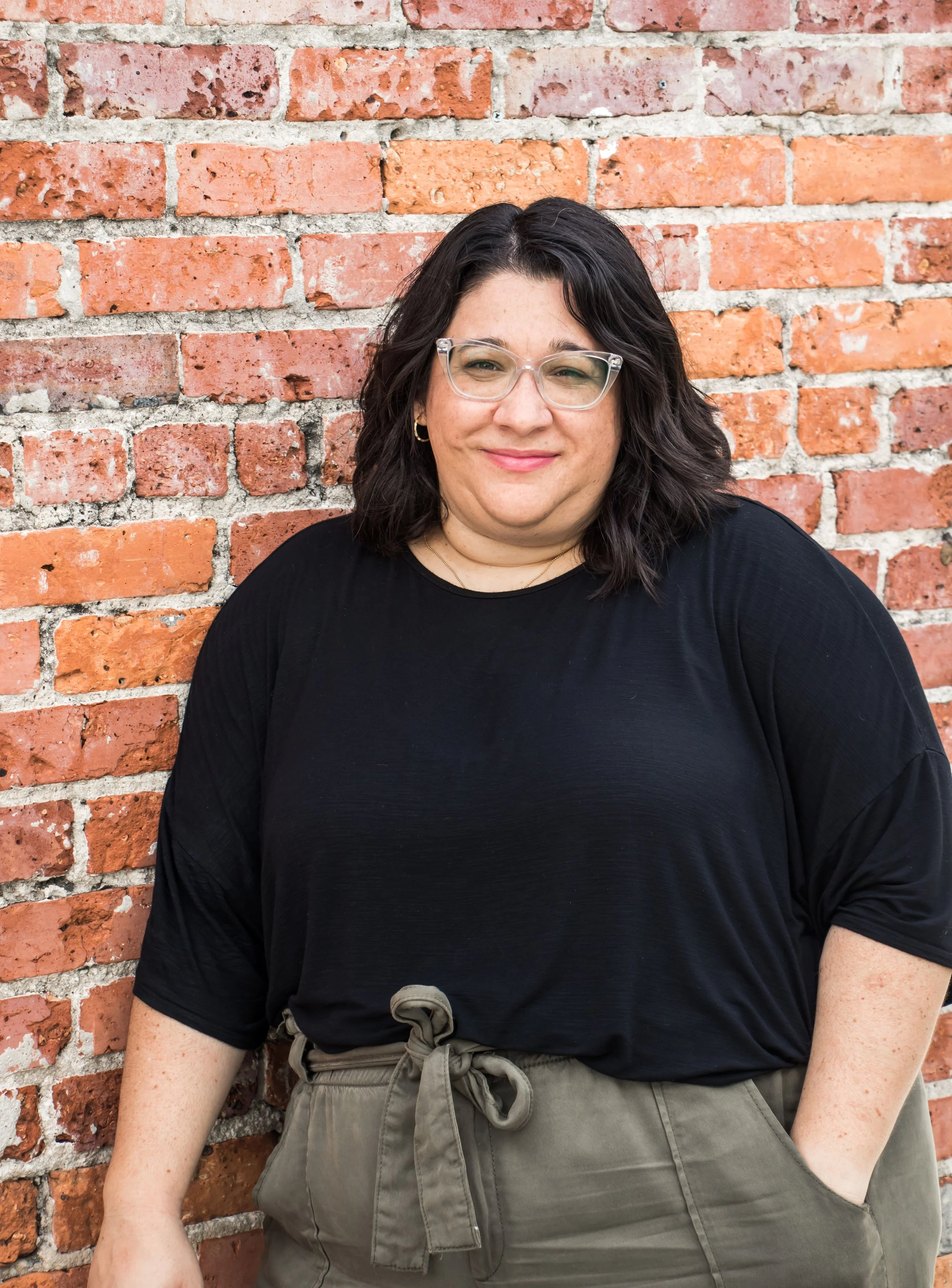
Hey, I'm Keri — And I've Literally Been You
I'm Keri Baker, LCSW - a therapist in Tampa who specializes in the relationship between people and food. In my main practice, I work with adults on body image, intuitive eating, and recovering from decades of diet culture.
But I also have a kid with ARFID. And I have done the circuit.
We did feeding therapy. We tried OT. We saw a dietitian. And although these providers were amazing in their own right, none of it really clicked - partly because every approach assumed my kid would be willing to do exposures, and she wasn't at the time.
When I found SPACE-ARFID - a parent-based treatment model out of Yale - something finally made sense to me, both as a clinician and as a mom. The idea that I could make things better by changing my behavior, not by making my kid do something hard she wasn't ready for? Now that was something different.
I got trained in it because I wanted to be able to offer this to other families who were where I had been. Exhausted. Scared. Out of ideas. Done with approaches that put all the pressure on the kid.
- Keri Baker, LCSW · Picky Eating & ARFID Therapist in Tampa, FL
My approach to this work is anti-diet and weight-inclusive - which means I'm not here to tell you what your kid should be eating, or to frame a limited diet as a moral failing. There's no one right way to feed a child. Our goal isn't a perfectly varied diet. Our goal is less suffering - less mealtime dread, less family stress, more room to breathe.
Questions?
FAQs

-
No - and for most families, they won't. In SPACE-ARFID treatment, the primary work happens with parents, which means your child doesn't have to sit in a therapist's office working on something they're not ready for. That said, if you have an older kid or a teenager who is genuinely motivated and wants to be part of the process, there's room for that. The point is that nobody gets pushed. Your child's readiness (or lack of it) doesn't need to be a barrier to getting started.
-
Yes. The approach works across the spectrum from extreme picky eating all the way to a formal ARFID diagnosis. If mealtimes are affecting your family's quality of life and traditional approaches haven't helped, this may be a good fit.
-
It's genuinely different. SPACE-ARFID isn't about exposures or getting your child to try new foods. The work is entirely focused on parent behavior - the accommodations and response patterns that, with the best intentions, can keep food anxiety in place. Your kid doesn't have to do anything.
-
Absolutely - and this is actually a great setup. I can provide dedicated parent support while your child's other providers work with them directly. I'm happy to collaborate with other clinicians when it's helpful.
-
It fits. A lot of parents navigating ARFID have their own food history - growing up in diet-culture households, their own restrictions, their own mealtime anxiety. That doesn't make you a bad parent; it makes you human. If it's relevant, we can address it alongside the parent work.
-
Yup! Virtual sessions are available throughout Florida and Vermont. In-person sessions are available in Tampa (Carrollwood/North Tampa area).
-
Sessions are $200 for 50 minutes. I'm private pay and don't bill insurance directly, but I provide Superbills you can submit to your insurance for potential out-of-network reimbursement.
-
The SPACE model is designed as a relatively brief treatment - usually somewhere in the range of 10–16 sessions, depending on your family's situation. We'd talk through what that looks like in your free consultation.
It is worth noting that to get the right amount of support, we would meet for weekly sessions.

Mealtimes don't have to feel like this forever.
If you're ready to try something different - something that doesn't ask your kid to be braver than they're ready to be - I'm here.
Accepting new clients · Tampa in-person & virtual throughout Florida & Vermont
Picky Eating & ARFID Therapy in Tampa, FL
Services also offered virtually throughout Florida and Vermont