Picky Eating and ARFID Are Parent Work (And No, That Doesn't Mean It's Your Fault)
TLDR: If your kid only eats seven foods and mealtimes feel like a hostage negotiation, you've probably already Googled what you did wrong. Nothing. You did nothing wrong. Feeding a kid is way more complicated than "just keep offering the broccoli," or “they’ll eat when they are hungry,” and a lot of the most effective help for picky eating and ARFID actually happens in sessions with the parent - not necessarily your kid. Here's what that looks like, why it works, and why it has nothing to do with blame.

Let's start here: if you're reading this at 9pm after another dinner where your kid ate exactly four bites of plain pasta and cried if any other food was present, I want you to put your phone down for one second and hear me.
You did not cause this.
I know you've thought it. Maybe a relative said something at a holiday dinner. Maybe a medical provider gave you a look (you know the look I’m talking about. Maybe you lie awake replaying every meal since your kid was eighteen months old, trying to find the moment you screwed it up. I want to save you the trouble: there isn't one. Feeding a kid is one of the most nuanced, high-stakes, deeply unglamorous jobs a parent does, and almost nobody outside of it understands how hard it actually is.
I get to say that with some authority, because I've lived it as a parent, not just as a therapist. My own kid has feeding challenges. I have made the second dinner. I have hidden the "safe" snack or meal in my bag at a birthday party like I was smuggling contraband. I know exactly what it feels like to sit at a table and watch your kid's whole body go rigid because there's a new food on the plate, and to feel like the whole world is judging you for it.
So here's what I actually want to talk to you about: why the work that can help the most isn't about your kid changing. It's about you.
Hold On - Parent Work? I Thought They Needed the Therapy
I get this reaction a lot. Parents come to me exhausted, sometimes a little offended, thinking I'm about to tell them to fix their parenting. That is not what's happening here.
Here's the thing: a huge amount of the most effective support for picky eating and ARFID happens with the parent in the room - and sometimes the parent is the only one in the room. Your kid doesn't even have to come to sessions. I meet with you, and we figure out, together, how you can show up differently at mealtimes in ways that actually help your kid feel safer around food, instead of more anxious about it.
That's not a punishment. It's not "parenting class." It's not me telling you what you did wrong. It's the opposite - it's giving you real tools, based on how anxiety and food avoidance actually work in a nervous system, so you stop white-knuckling every meal and start feeling like you have a plan. You start feeling like you and your kid can have some flexibility.
Why does it work this way? Because you're the one at every meal. You're the one who knows if today is a "maybe try one bite" day or a "everybody just needs to get fed and survive" day. A kid's relationship with food doesn't live in a therapy office for fifty minutes a week - it lives at your kitchen table, multiple times a day, every single day. So that's where the important work has to happen too.
Why Feeding Is So Much Harder Than It Looks
Here's something I wish every well-meaning relative, pediatrician, and Instagram parenting account understood: feeding a kid is not a willpower issue, on your part or theirs.
For a lot of kids with picky eating or ARFID, food isn't just food. It might be a texture their body genuinely can't tolerate. It might be a smell that triggers a real, physical gag reflex. It might be anxiety about choking, or about the unknown, or about losing control in one of the only places in their day where they have control. It might be about literally zero interest in food at all. None of that is a kid being "difficult." None of it is you being "too soft" or "too strict" or whatever the internet has decided this week.
And on your side, you're managing a hundred competing things every single meal. You want your kid to eat something. You want to not create a battle. You want to not pass down your own weird stuff about food. You want dinner to be over before 8pm. You're doing math in your head about calories and nutrients and macros and whether this is a hill worth dying on tonight, all while also just trying to get everyone fed and out the door. That is a genuinely hard, constant, invisible job. Nobody hands you a manual for it (and if so I never got mine!), and the advice that is out there is usually written for kids who don't have this going on
So when I say this is "parent work," I don't mean it's your fault. I mean you're the person with the most power to change how mealtimes feel - for both of you. And that's actually good news, because it means you don't have to wait for your kid to be ready to "do the work." You can start now.
What This Actually Looks Like
I'm not going to pretend this is a five-step hack. It's not. But here's a taste of what we work on together:
Figuring out what's actually driving the eating struggles - sensory stuff, anxiety, control, all three, something else entirely
Untangling what's making mealtimes worse without meaning to - some of the totally understandable things you're doing to survive dinner might be quietly reinforcing the fear underneath it, and we figure that out together, gently, with zero shame
Building a plan you can actually follow that slowly helps your kid feel safer around new or scary foods, without turning every meal into a battle (and this could actually include your kid not needing to eat new foods if they aren’t ready)
Giving you language for the moments that used to make you freeze - what to say when they refuse, when they gag, when they melt down, when a well-meaning grandparent tries to bribe them with dessert
Helping you take care of yourself in this too - because feeding a kid with ARFID or extreme picky eating is exhausting, and you deserve support, not just a strategy
I'm trained specifically in SPACE - a treatment model built for exactly this kind of parent-led work with anxious and picky-eating kids, plus the ARFID-specific version of it. It's not guesswork. It's a real, structured approach. It just happens to center you, the parent, as the person doing most of the active work - which honestly, if you think about it, makes sense. You already are the person doing most of the active work. This just makes sure it's actually working.
Our hope together is to build confidence - for you, for your kid, and whoever else is in the mix. Confidence that they (and you!) can flexibly navigate situations involving food.
If you're in the middle of this right now - Googling at midnight, dreading dinner, wondering if you're the only one - I want you to know two things. One, you're not the only one, not even close. Two, you don't have to figure this out alone, and you definitely don't have to wait for a crisis to get support.
I see families for this exact thing, in person here in the Carrollwood/North Tampa area, and virtually throughout Florida and Vermont. I'm also starting an email list specifically for parents navigating picky eating and ARFID - real talk, practical stuff, none of the toxic "just keep offering it 20 times" advice that ignores what's actually going on for your kid.
If that sounds useful, and if you want to talk about your specific situation, reach out for a free consult - no pressure, just a conversation.
One More Thing
I want to say this last part directly, because I think it matters more than any strategy I could give you: this is not a referendum on you as a parent. You are allowed to be exhausted by this. You are allowed to have cried in the pantry over a chicken nugget. You are allowed to not have it figured out yet. None of that means you're failing your kid. It means you're a parent who's paying attention to something real, and trying to get it right, in a world that hasn't given you very good tools to do it with.
That's exactly where this work starts.
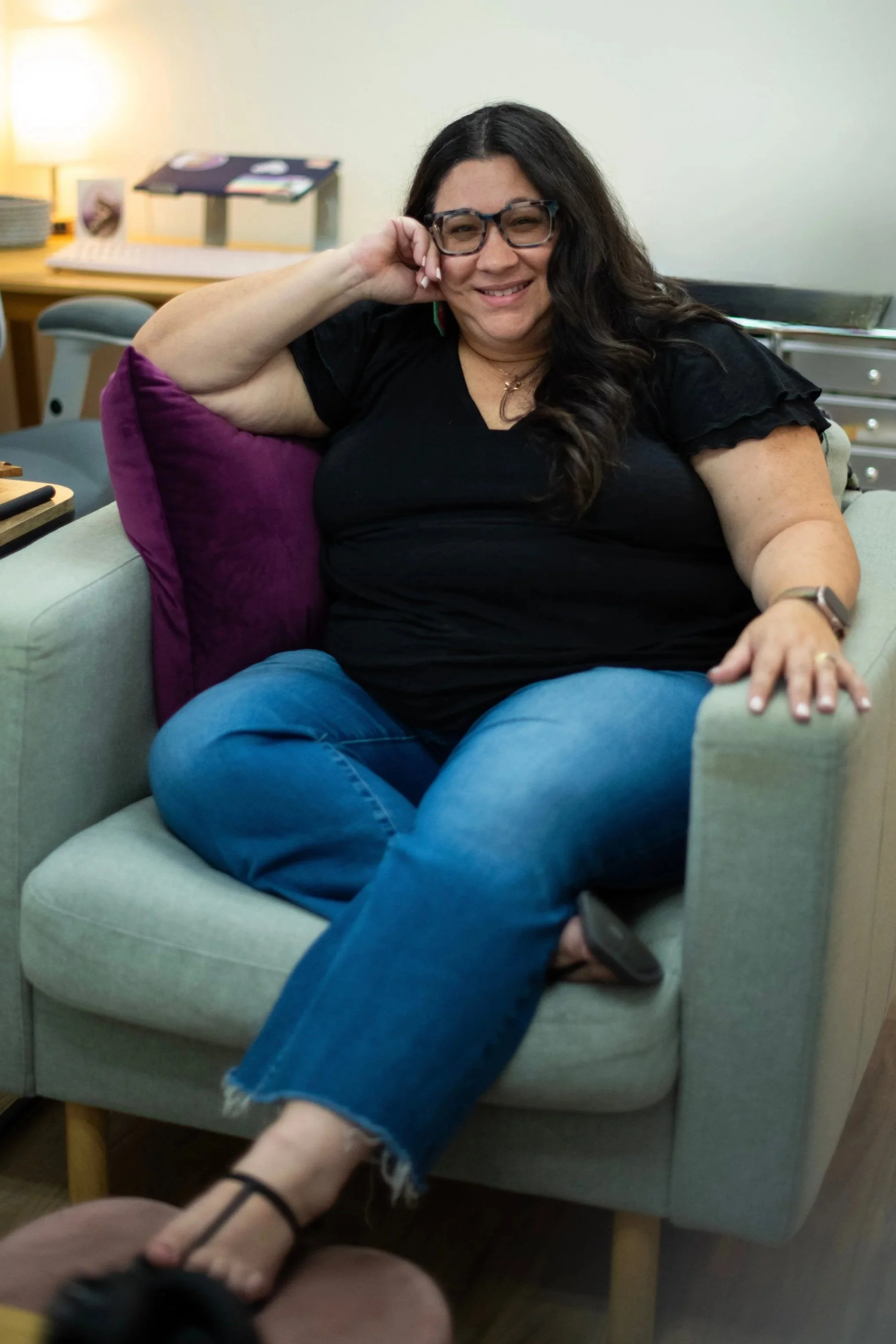
About Keri
Keri Baker is a licensed clinical social worker (LCSW) with a private practice in the Carrollwood/North Tampa area, seeing clients in person in Tampa and virtually throughout Florida and Vermont. She's trained in SPACE and specialty SPACE for ARFID and picky eating, and she brings both clinical training and personal experience to this work - her own child has ARFID. She also works with highly sensitive adults navigating body image, food, and self-esteem, because she believes the whole family's relationship with food deserves real support, not more rules.